
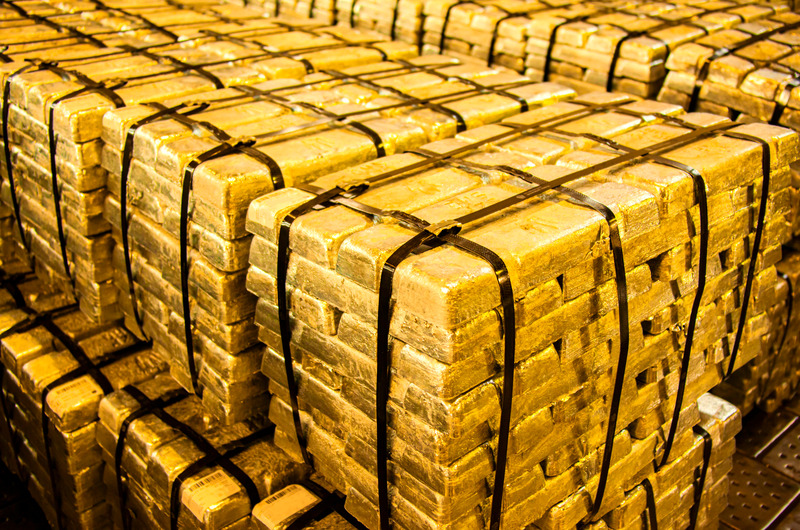
Most people who buy gold focus on the product in front of them: the bar, the coin, the weight, the purity, and the price. Far fewer stop to consider the network of businesses that made that purchase possible in the first place.
Behind every gold bar on a dealer’s website, investment coin in a display case, and shipment of bullion moving across borders is found a sophisticated supply chain powered by wholesale gold suppliers. These organisations rarely appear in marketing campaigns. They seldom receive attention from retail buyers. However, they perform a critical role in ensuring that gold remains accessible, liquid, and efficiently distributed throughout the global economy.
Wholesale gold suppliers play a critical role in the global gold market. Learn how they influence pricing, availability, liquidity, and access to gold for investors and businesses alike.
Understanding how wholesale gold suppliers operate is not merely an exercise in learning industry terminology. Rather, it provides valuable insight into how the gold market functions. It tells the story of why prices vary between sellers. It also provides details on how the supply reaches different regions. From it, we also learn what allows investors and businesses to access physical gold when demand rises.
In several ways, wholesale suppliers form the backbone of the modern gold market. Investors often focus on gold itself as a store of value. However, it is also crucial to remember that the systems that move, distribute, and supply that gold are equally important to the market’s stability and efficiency.
The Hidden Layer of the Gold Market
When people think about the gold industry, they often picture miners extracting ore from the ground. Some think of investors purchasing bars and coins. However, in reality, the journey from mine to buyer involves multiple stages.
Gold must be refined, certified, transported, stored, distributed, and ultimately sold. Between the refinery and the end user stands a network of wholesalers that connects supply with demand. These wholesale suppliers purchase gold in large volumes and distribute it to dealers, jewellers, manufacturers, investment firms, and other commercial buyers.
Their role is similar to that of a logistics hub. They help ensure that gold flows efficiently through the market rather than becoming trapped at any point in the supply chain. Had they not been there, many retailers would find it difficult to maintain inventory. Buyers would face fewer choices. The market inefficiencies would become more pronounced.
The average investor may never interact directly with a wholesale supplier. However, the availability and pricing of the products they purchase tend to be influenced by wholesale activity behind the scenes.
How Wholesale Gold Suppliers Shape Gold Pricing
Many new investors assume that the price of gold is determined entirely by the international spot price. While the spot price is undoubtedly important, it is only part of the story.
Physical gold products almost always trade at a premium above the spot price. That premium reflects a range of factors. These include refining costs, transportation, storage, insurance, and distribution. Wholesale gold suppliers play a central role in determining how efficiently those costs are managed.
Considering that wholesalers purchase and distribute gold in large quantities, they benefit from economies of scale. Bulk transactions allow costs to be spread across larger volumes. This helps to improve efficiency throughout the supply chain. In turn, this can contribute to more competitive pricing for businesses and investors further down the chain.
Competition among wholesalers also influences pricing dynamics. In instances where multiple suppliers compete to serve dealers and commercial buyers, market participants gain access to a wider range of products and pricing structures. This competition helps create a more responsive and efficient marketplace.
Understanding this relationship highlights an important reality: gold pricing is not simply about the value of the metal itself. It is also shaped by the systems that move that metal from one participant to another.
Why Retail Investors Benefit From Wholesale Gold Suppliers
Retail investors may not purchase directly from wholesale suppliers, but they benefit from their presence in several important ways.
Perhaps the most obvious benefit is product availability. Investors today can choose from an extensive range of gold products, including small bars, larger investment bars, and a variety of bullion coins. Maintaining this breadth of choice requires reliable supply networks capable of serving numerous dealers across different regions.
Wholesale suppliers also contribute to market consistency. In times of higher demand, strong distribution networks can replenish inventory and maintain product availability. This does not eliminate market pressures. However, it can help reduce bottlenecks and improve access to physical gold.
Another benefit is market reach. In previous generations, investors were often limited to local dealers or regional suppliers. Today, digital commerce and global distribution networks have expanded access significantly. Many of the products available online owe their accessibility to the extensive infrastructure built and maintained by wholesale suppliers.
The result is a market that offers greater convenience, more choice, and broader access than ever before.
Wholesale Gold Suppliers and Market Liquidity
Liquidity is a term frequently used in finance, but its importance is sometimes overlooked in discussions about physical gold.
A liquid market is one in which assets can be bought and sold efficiently without causing significant price disruptions. Liquidity is valuable because it provides flexibility. Buyers can acquire assets more easily, while sellers can convert holdings into cash when necessary.
Wholesale gold suppliers contribute to this liquidity by ensuring that gold continues moving through the market. They maintain relationships with refiners, dealers, manufacturers, and institutional buyers, helping to match supply with demand across multiple channels.
This activity supports the broader functioning of the gold market. A well-supplied and interconnected marketplace generally offers better access to products and smoother transactions than one characterised by fragmented supply chains.
For investors, liquidity is often viewed as a desirable characteristic because it contributes to market resilience and accessibility.
The Growing Globalisation of Gold Trading
Gold has always been a global commodity, but the way it is traded has changed dramatically over the past two decades.
Advances in logistics, communication, and digital commerce have transformed how gold moves around the world. Today, a product refined in one country can be distributed by a wholesaler in another and ultimately purchased by an investor thousands of kilometres away.
This interconnected environment has increased the importance of wholesale gold suppliers. Their ability to coordinate shipments, manage inventory, and facilitate distribution across jurisdictions helps connect markets that were once relatively isolated.
As a result, buyers now have access to a wider range of products than previous generations could have imagined. Internationally recognised refiners, diverse bar sizes, and global bullion brands are increasingly available through networks supported by wholesale suppliers.
The growth of online bullion platforms has accelerated this trend. Digital marketplaces allow dealers and investors to access products from a broader range of sources, while wholesalers help ensure that those products can be delivered efficiently.
In many respects, the modern gold market reflects broader trends in global commerce. Technology has reduced geographical barriers, while wholesale infrastructure has made international distribution more practical and efficient.
Wholesale Gold Suppliers and Business Buyers
The importance of wholesale suppliers extends far beyond the investment market.
Jewellery manufacturers rely on steady access to precious metals to maintain production schedules. Industrial users require gold for specialised applications in sectors ranging from electronics to healthcare. Investment firms and wealth management companies may also require reliable access to bullion products on behalf of clients.
For these organisations, supply consistency is often as important as price.
A jeweller cannot simply pause production because gold is unavailable. Likewise, investment firms need confidence that they can source products when client demand increases. Wholesale suppliers help meet these requirements by maintaining inventory, managing procurement relationships, and coordinating distribution.
Therefore, their role extends beyond just selling gold. They provide continuity within the broader ecosystem. This helps businesses plan and operate with greater certainty. This commercial function is one of the reasons why wholesale suppliers remain central to the industry’s long-term stability.
What Makes a Strong Wholesale Gold Supplier?
While investors often evaluate gold products, industry participants frequently focus on the capabilities of the supplier itself.
A strong wholesale supplier contributes to market efficiency through consistency, reliability, and operational expertise. The most effective suppliers are those capable of maintaining stable relationships across the supply chain while responding to changing market conditions.
Transparency is another important characteristic. Clear product specifications, accurate documentation, and effective communication contribute to confidence throughout the market.
Product diversity also matters. The needs of buyers differ. Suppliers that offer a broad range of products can help support a more flexible and responsive marketplace.
Logistics capabilities are equally important. Gold is a high-value asset that requires careful handling, secure transportation, and effective inventory management. Suppliers that excel in these areas help strengthen the entire distribution network.
Ultimately, the best wholesale suppliers are not defined solely by the volume of gold they move. Their value lies in their ability to support a functioning, efficient, and trustworthy marketplace.
Why the Future of Gold Depends on Strong Supply Chains
Gold has endured for thousands of years as a store of value, a medium of exchange, and a symbol of wealth. Yet the future of the industry will depend not only on the metal itself but also on the systems that support its movement.
As investor interest in physical gold continues to evolve, supply chains will remain a critical component of market performance. Efficient distribution networks help ensure that products reach buyers, businesses maintain operations, and markets remain accessible.
This is particularly important in an increasingly interconnected world. Demand patterns can shift rapidly across regions, requiring suppliers to adapt quickly and efficiently. Wholesale networks provide the flexibility needed to respond to these changes.
The growing digitalisation of commerce may further increase the importance of wholesale suppliers. As more transactions move online, the ability to coordinate inventory, logistics, and fulfilment will become even more valuable.
In this environment, wholesale suppliers are likely to remain essential contributors to the health and resilience of the gold market.
Conclusion
The next time you see a gold bar displayed online or offered by a dealer, it is worth remembering that the product represents more than a refined piece of precious metal. It is the final link in a much larger chain that connects mines, refiners, distributors, logistics providers, and buyers around the world.
Wholesale gold suppliers occupy a central position within that chain. They help shape pricing, support liquidity, expand access, and ensure that gold continues to move efficiently through global markets. Their work may take place largely behind the scenes, but its impact is visible throughout the industry.
For investors, businesses, and anyone seeking to understand how the gold market truly functions, recognising the role of wholesale suppliers provides a more complete picture of the ecosystem. Gold may be the asset that attracts attention, but wholesale suppliers are among the forces that keep the market moving.